
Bed Bug Control Solutions
We use certified canine teams to accurately locate bed bugs, then eliminate them using safe, proven treatments.
We're here to help.
Bed Bug Exterminators & K9 Inspections
Effective bed bug treatment starts with accurate detection. We use NESDCA-certified canine teams to pinpoint their location, followed by thermal and freezing technologies to eradicate the infestation without giving them a chance to spread to other areas.


About Bed Bugs
Bed bugs (Cimex lectularius) are nocturnal parasites that feed exclusively on blood. The adults are flat, oval, reddish-brown insects about the size of a small apple seed.
In densely populated areas like New York City, these pests spread rapidly. They can crawl through wall voids between neighboring units or hitchhike directly on luggage and used furniture. Each year, infestations occur in approximately 1 out of 20 multi-family buildings across the city, according to data from HPD’s annual bed bug reports (Local Law 69).

Signs of Bed Bugs
Bed bugs rarely wander out in the open, so you must closely inspect mattress seams, bed frames, and other tight crevices where they like to hide. Aside from the insects themselves, physical signs include translucent skin casings, small bloodstains, and fecal spotting.
Waking up with itchy, red welts on areas of exposed skin is a classic early indicator, but should not be taken as conclusive on its own. Skin reactions to bed bug bites varies based on the individual, and roughly 30% of people don’t react at all.
Comprehensive Bed Bug Solutions
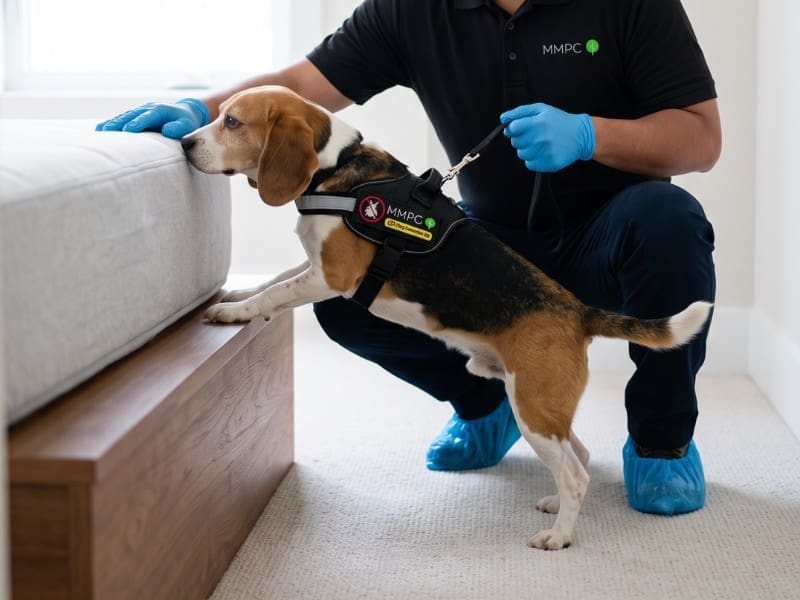
At MMPC, we employ specially-trained and NESDCA-certified canine teams to pinpoint the location of bed bugs. Once found, we use targeted thermal and freezing technologies to exterminate the insects and their eggs.
Successful remediation requires client cooperation and preparation. We outline these specific steps before beginning any chemical or thermal treatment program.
Methods that make eco-sense

Certified K9 Inspection
Bed bug sniffing dogs can detect the scent of live bed bugs and viable eggs with up to 98% accuracy.
Each of our NESDCA-certified canine teams consists of a trained scent detection canine working alongside an experienced handler. The handler carefully guides the canine around each room in order to thoroughly sniff out all possible hiding spots. The handler always follows up with a visual confirmation and documents any evidence found.
The inspection helps to determine three important things:
- Do you have any bed bugs?
- If yes, where are they hiding?
- What is the scope of the infestation (i.e. isolated or spread out)?
This provides valuable information about your situation and helps us come up with a comprehensive plan to deal with a potential bed bug infestation.
Cryonite (Freezing)
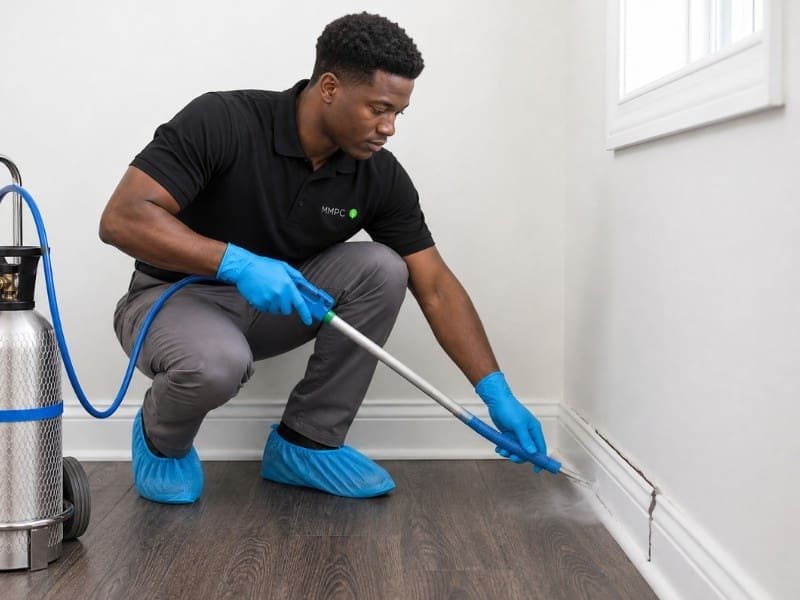
Sensitive environments require non-toxic solutions. We apply Cryonite, an eco-friendly formulation that converts liquid carbon dioxide (CO2) into a dry ice “snow” at roughly −110°F. This extreme cold freezes and kills bed bugs instantly on contact. Because the CO2 sublimates and leaves zero chemical residue, it is the ideal application for treating sensitive fabrics and electronics. Cryonite requires at least two visits scheduled 14 days apart. This precise spacing ensures we eliminate any newly hatched nymphs.
Ambient Heat
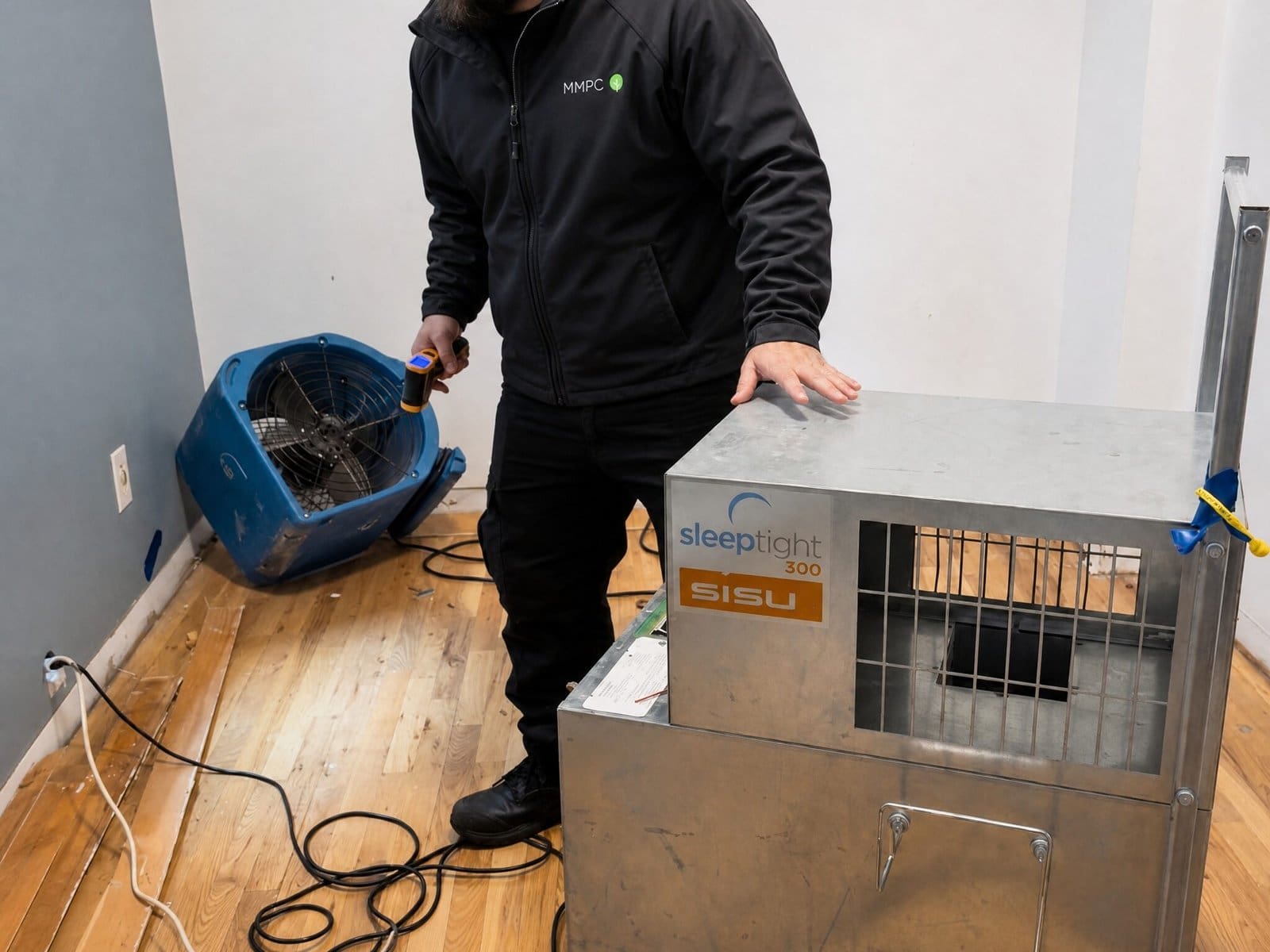
Heat leaves no survivors. Using specialized equipment, we raise the ambient room temperature to above 118°F. At this lethal thermal threshold, adult bed bugs die within 20 minutes and their eggs die within 90 minutes. The heat penetrates deep into thick furniture and wall voids, eliminating the population across all life stages in a single 6- to 12-hour visit.

Fumigation
Severe infestations require aggressive intervention. Fumigation utilizes an EPA-approved gas (Vikane) to achieve 100% total elimination. Structural fumigation involves sealing an entire house or building, forcing the gas to penetrate every microscopic void. We also perform off-site chamber fumigation. This allows us to securely treat heavily infested personal items like clothing, luggage, books, and antique furniture without damaging the materials.
About MMPC
Who we are
MMPC is a small business proud to serve our fellow New Yorkers and surrounding areas. Our team combines 30 years of pest control experience with cutting-edge, eco-friendly technologies and methods — all to ensure the most effective, discreet and customized solutions for our clients.
How we work
We believe that a successful solution begins with listening carefully. MMPC asks the right questions to treat the root causes, not simply the symptoms.






Contact Us
MMPC is available seven days a week to address your pest control needs. Our office hours are 7:00am to 12:00am on weekdays and 9:00am to 7:00pm on weekends.
Call: (212) 219-8218
Email: info@mmenviro.net
Frequently Asked Questions
Bed bugs are small, reddish-brown insects that feed on blood.
Adult bed bugs are flat, oval-shaped, and mahogany to red in color. They grow no larger than ¼ inch. Baby bed bugs (nymphs) resemble the adults, but are smaller and somewhat lighter in color and can appear translucent.
Signs of a bed bug infestation include:
- Itchy bites
- Bloodstains on sheets
- Fecal marks
- Musty odors
- Shell casings
- Bed bug eggs
- Actual bed bugs
While some DIY methods may help reduce the number of bed bugs temporarily, a professional exterminator is usually required to completely eliminate an infestation. Bed bugs are notoriously difficult to eradicate without specialized equipment and expertise. In many cases, unsuccessful attempts at getting rid of bed bugs on your own may cause the infestation to worsen by giving bed bugs more time to reproduce and spread.
If you’re considering trying to deal with bed bugs yourself, we highly recommend first getting a certified canine bed bug inspection to help determine where bed bugs are hiding and the scope of the infestation. If the presence of bed bugs is limited and isolated, you may be able to get rid of them with a combination of diatomaceous earth, interceptors, mattress encasements, and thorough cleaning and vacuuming.
The cost of bed bug extermination can vary widely depending on the extent of the infestation, the size of your home, and the methods used. Please contact us for a customized quote.
Depending on the scope of the infestation, you can choose between treating only the affected room (spot treatment), or the entire premises (full treatment). While this decision is up to you, we typically recommend full treatments because bed bugs can travel quickly, and it is impossible to control where bed bugs travel before and during treatments.
Regardless of which strategy or method, proper preparation is critical to the success of any bed bug treatment program. This typically involves washing and drying bedding, removing clutter, vacuuming thoroughly, and moving furniture away from walls. Bed bugs harboring inside personal items such as clothing, bedding, books, and picture frames should be manually inspected and removed.
Preparation can be overwhelming, but there are professional companies that can expedite this process by manually inspecting, cleaning, and bagging everything before extermination services begin. There are professional preparation and/or moving companies we recommend, and that you can find by clicking here.
The time it takes to eliminate bed bugs depends on the extent of the infestation and the treatment method.
- Traditional chemical applications and freezing (Cryonite) require at least 2 visits spaced 14 days apart. This is because bed bug eggs are resistant to chemicals and may hatch after the initial visit (the second follow up visit is needed to exterminate any newly hatched bed bugs).
- Ambient heat treatment only requires 1 visit, since heat effectively kills bed bugs at all life stages — including their eggs.
- DIY methods like diatomaceous earth can take several weeks or more, depending on where and how it’s applied.
While professional bed bug treatments are highly effective, there is a risk of bed bugs coming back. This can be due to various reasons:
- The infestation had already spread outside of the treatment area (such as in neighboring apartments), allowing bed bugs to return afterwards.
- The treatment area was not prepared properly prior to treatment.
- Bed bugs were reintroduced from clothing, bedding, or other personal items that were not cleaned or fumigated.
- Bed bugs were reintroduced due to recent travel from a bed bug infested area (a new infestation)
To prevent future infestations, regularly inspect your home, avoid bringing used furniture or items of questionable origin into your home, and be cautious when traveling to places known for bed bug problems. Additionally, consider using mattress and box spring encasements and regularly wash and dry bedding on high heat.