
Ant Control Solutions
We eliminate the existing colony with targeted treatments and protect your property from future invasions through reliable seasonal maintenance.
We're here to help.
Ant Exterminator & Control Services
Spraying foraging ants won’t solve an infestation. Our approach focuses on exterminating the colony. We deploy advanced, slow-acting baits that worker ants carry straight back to the nest, eliminating the source of the problem for good.


About Ants
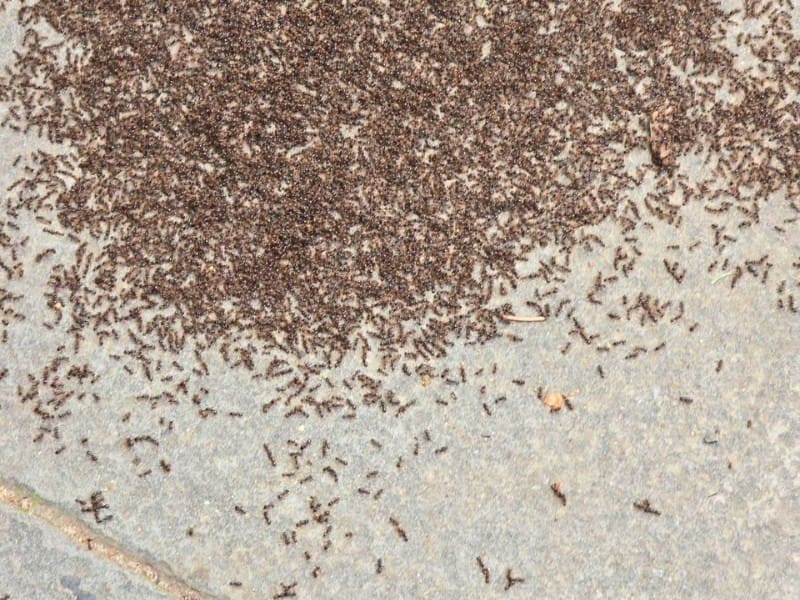
Ants are highly organized eusocial insects. A single scout can leave a pheromone trail that mobilizes a colony of up to 100,000 individuals. Common pest species like pavement ants and odorous house ants actively contaminate food surfaces, while carpenter ants hollow out damp or weakened wood to create nesting spaces, which can lead to expensive repairs over time.
Signs of Ants
If you have an ant issue, you might see an active foraging trail moving along baseboards, countertops, or moisture sources like sinks. For carpenter ants, look for “frass”—fine, sawdust-like debris pushed out near windowsills or baseboards as they excavate inside the walls.
Comprehensive Ant Solutions
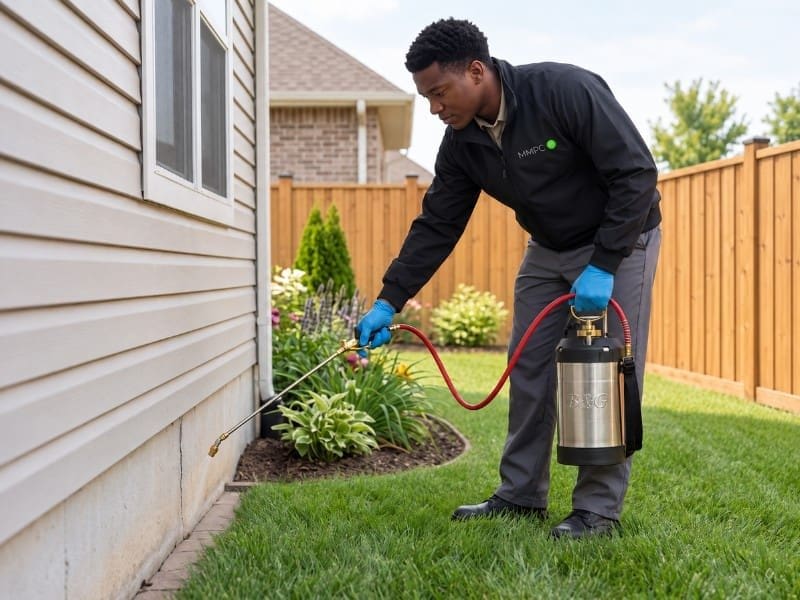
Effective ant control requires targeting the nest directly. We combine specialized baits with targeted crack-and-crevice treatments and exterior perimeter defenses. This multi-pronged approach collapses the colony and blocks new foragers from entering the building.
Methods that make eco-sense

Treatment and Assessment
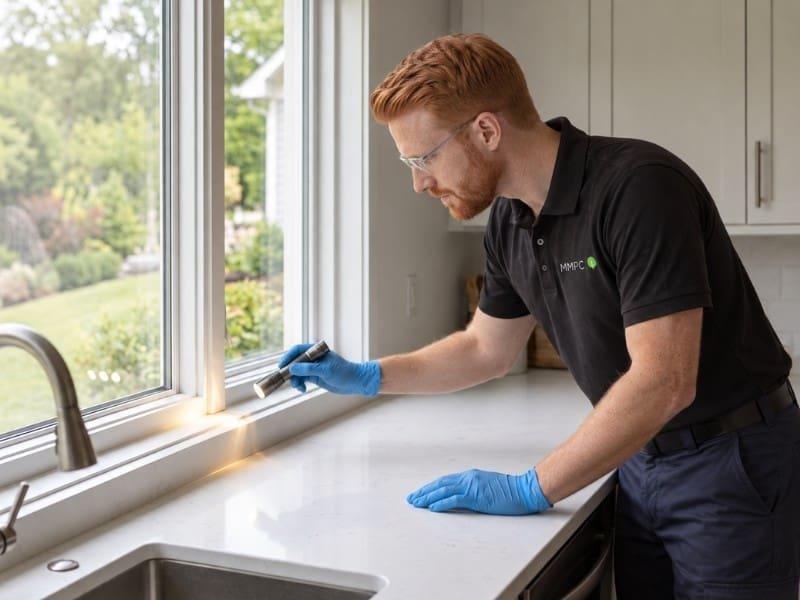
This service combines immediate population knockdown with a top-down structural assessment to locate the root cause of the infestation. We inspect the exterior for environmental attractants, looking for vulnerabilities like overgrown shrubs acting as bridges directly to your siding. To control the active population, we apply a liquid residual barrier along the foundation and place slow-acting gel baits indoors along active trails. Finally, we recommend a plan to permanently seal entry points and sever their structural pathways.
Spraying and Baiting
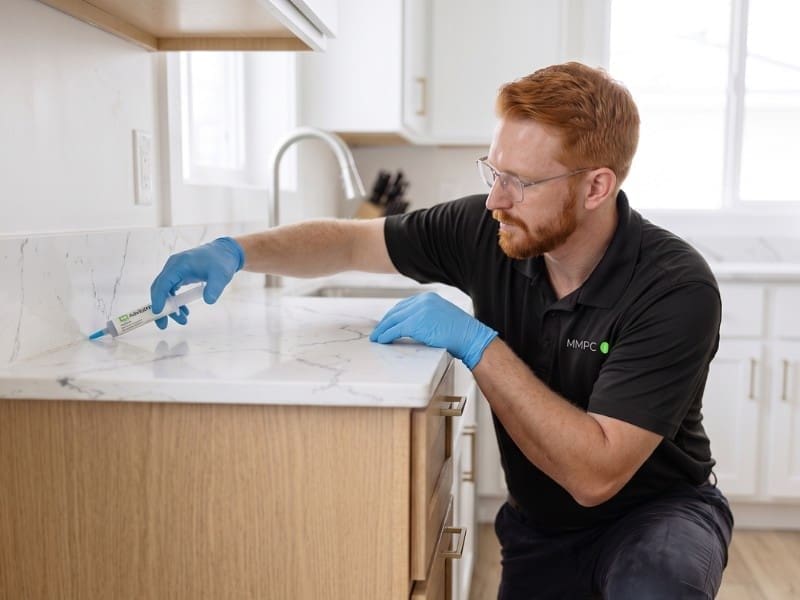
We deploy an aggressive, multi-layered approach to target the colony inside and out. Outdoors, we place bait stations directly into the soil to intercept foragers. Indoors, we place slow-acting gel or granular baits in high-traffic zones. Workers carry this bait back to the hidden nest, feeding it directly to the queen to collapse the colony at its source. We supplement this with targeted sprays that deliver up to 30 days of residual control. For carpenter ants, we inject insecticide dust directly into wall voids to penetrate their structural nesting galleries.

Exclusion
Ants exploit tiny cracks and gaps around window frames, utility lines, and exterior doors. We identify and seal these vulnerabilities with construction-grade materials to block their access into your home or building.
About MMPC
Who we are
MMPC is a small business proud to serve our fellow New Yorkers and surrounding areas. Our team combines 30 years of pest control experience with cutting-edge, eco-friendly technologies and methods — all to ensure the most effective, discreet and customized solutions for our clients.
How we work
We believe that a successful solution begins with listening carefully. MMPC asks the right questions to treat the root causes, not simply the symptoms.






Contact Us
MMPC is available seven days a week to address your pest control needs. Our office hours are 7:00am to 12:00am on weekdays and 9:00am to 7:00pm on weekends.
Call: (212) 219-8218
Email: info@mmenviro.net
Frequently Asked Questions
Contact sprays kill only surface workers, leaving queens and satellite nests intact. To break the cycle, we track active trails after dark back to hidden colonies. We then match the bait type to their seasonal needs—protein/fat gels in spring; sugar-based liquids in late summer and fall. We wait at least 72 hours after successful bait uptake before sealing entry points to maintain toxin flow back to the nest.
Carpenter ant presence is revealed by dusk foragers and telltale debris. Look for live worker ants emerging around dusk. You might also find coarse, clean wood-shaving frass piled near baseboards, foundation seams, or window sills. In severe cases, you can hear faint rustling or crackling sounds inside walls, especially in moisture-prone areas like deck boards, eaves, and window frames.
No. Repellent sprays and powders only drive ants into new nesting sites and can trigger budding into satellite colonies. For lasting control, always pair repellents with sanitation, exclusion, and colony-targeted baiting. Use repellents only as a temporary knockdown once baits are in place.