
MMPC Field Guide: Beetles
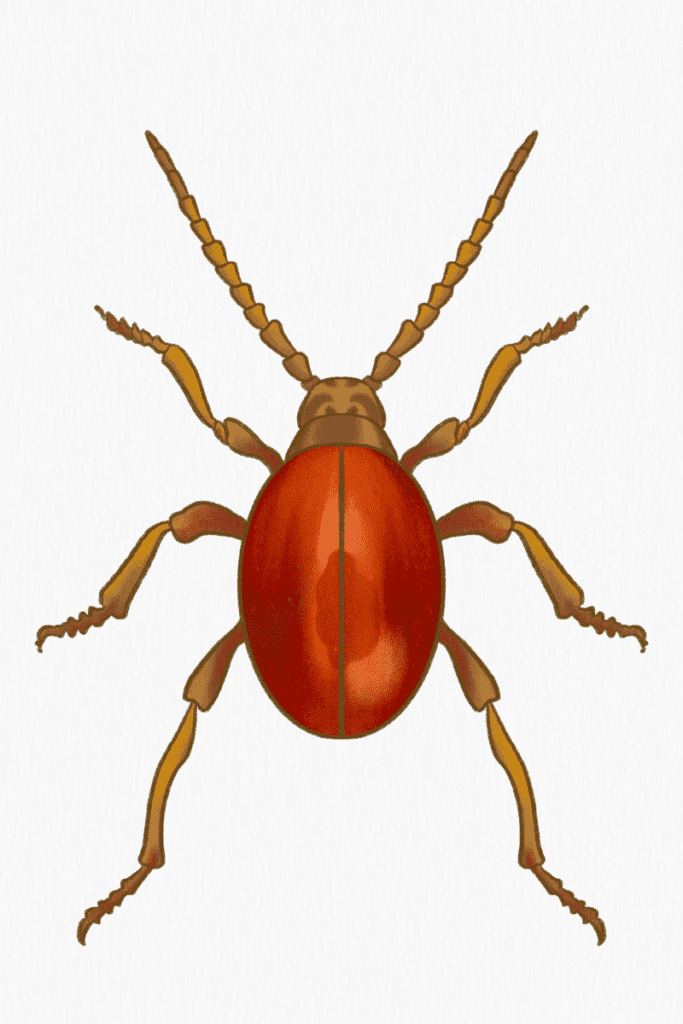
Beetles (order Coleoptera) are hard-bodied insects with a shell-like outer wing called an elytra. It runs straight down the back and doesn’t move much—just lifts when they fly.
Indoors, they show up wherever food is available—dry goods, wood, insulation, crawlspaces, closets, and even potted plants. Most infestations stay hidden until the damage starts showing. You won’t find trails or nests like you would with ants or mice. These pests keep to themselves.
Biology
Beetles don’t start out as beetles. First they’re eggs. Then larvae. That’s the stage that does the damage. Larvae chew through whatever they were born into—flour, wool, wood, pet food. They stay out of sight and feed slow. Most people don’t know they have a problem until the adults show up later. By then, it’s already been going on for a while. Once the larvae are full, they hole up, pupate, and turn into adults. Adults don’t usually feed much—they’re just there to mate and start it over.
Outdoors, they breed in cycles. Indoors, they don’t need a season. If the temperature stays in the 60–85°F range and there’s something to eat, they’ll keep reproducing. Some crawl, some fly, some stay buried in material until they’re ready to emerge.
Risks
Beetles don’t bite. They don’t spread disease. But they can still cause serious property damage.
- Pantry beetles lay eggs right in dry food—flour, cereal, pet kibble, spices. Larvae hatch and feed from the inside out. You usually won’t know they’re there until you see powdery frass, webbing in the corners of packages, or tiny holes chewed through the bags.
- Wood-borers dig into floors, furniture, or framing. The larvae stay buried and slowly cause damage over time—sometimes for years.
- Fabric beetles are a common household pest. Adults are harmless but their larvae chew holes through clothes, rugs, and upholstery.
- Plant feeders show up in houseplants. Adults chew the edges of leaves. Larvae go after the roots and can kill the whole plant.
Identification
Most beetles in homes are small—between 1/16″ and 3/8″ long, about the size of a sesame seed to an apple seed. They’re usually brown, black, or reddish. Some are round, some are long and flat.
What tells you it’s a beetle is the shell. That hard outer covering on the back? That’s not just for show—it’s their hardened wing covers (called elytra). They meet in a straight line down the middle. If you see that seam and a tough-looking back, you’re probably looking at a beetle.
Larvae don’t look anything like the adults. Most are soft-bodied—look like little worms or grubs. And they’re the ones doing most of the feeding.

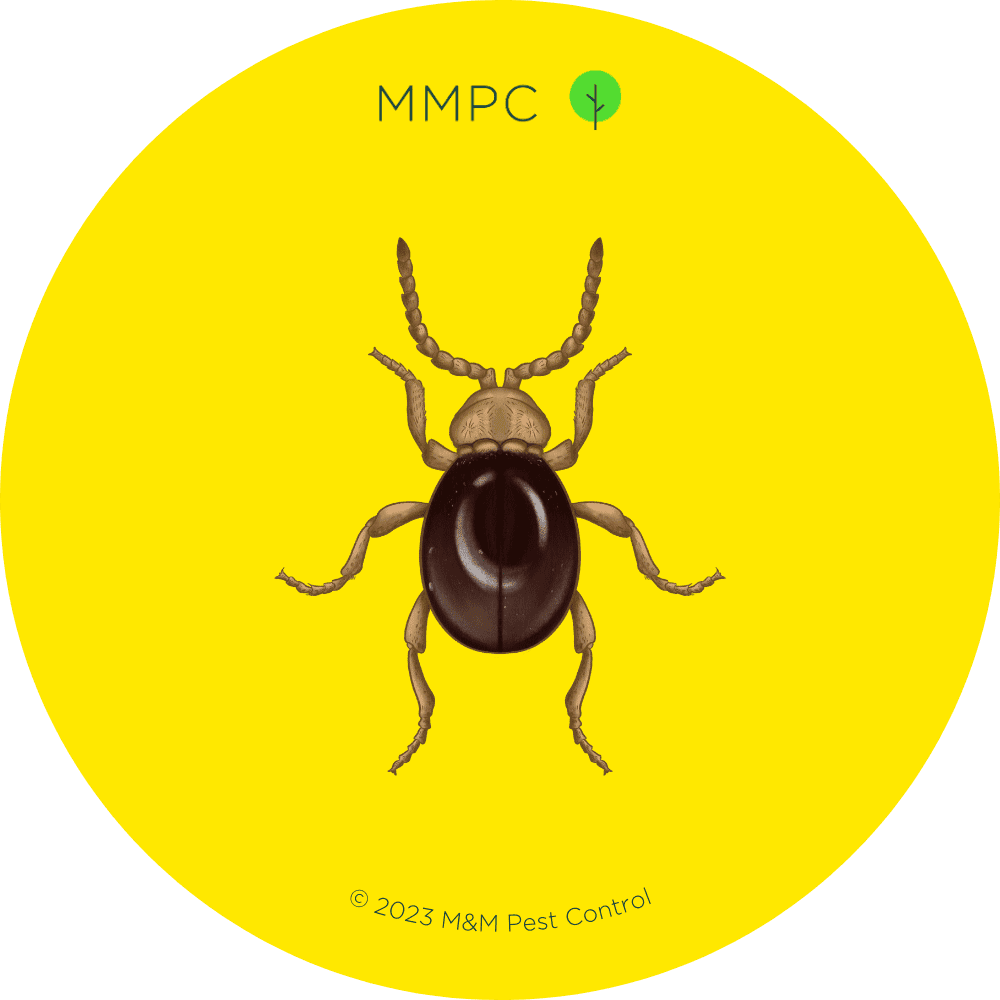
Shiny Spider Beetle
Gibbium psylloides
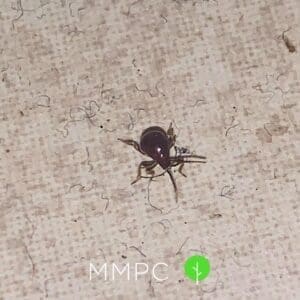
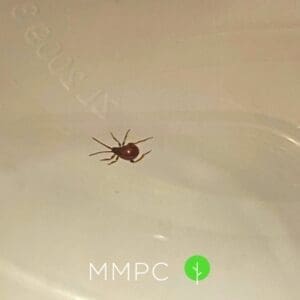
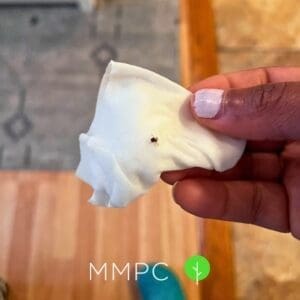
You’ll find these in wall voids, cabinets, crawlspaces—anywhere dark and a little musty. They feed on old food, dust, droppings, dead insects—whatever’s been sitting around. Commonly misidentified as spiders due to their body shape and movement. Visible adults typically indicate an active population nesting within nearby voids or storage areas.
Key ID Features
- 1.5–3.5 mm (1/16″–1/8″)
- Smooth, shiny, reddish-brown to black body
- Long, threadlike antennae and pale, hairy legs
- Head tucked under—the abdomen is most of what you see
- Active at night; favors humid voids and undisturbed areas
American Spider Beetle
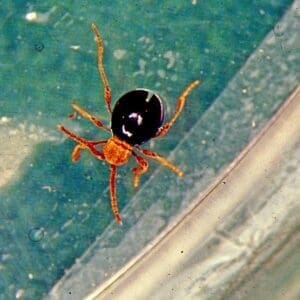
Mezium americanum
Same shape and behavior as G. psylloides, but a little fuzzier. Found in old storerooms, crawlspaces, and behind appliances—especially in older buildings. Scavenges on anything organic: grain dust, dried food, rodent waste. People usually notice them when they show up under stuff that hasn’t been moved in a while.

Key ID Features
- 1.5–3.5 mm (1/16″–1/8″)
- Pinched waist between thorax and abdomen
- Covered in pale yellow-gray hairs
- Long legs and antennae give it a spider-like look
- Found in dusty, undisturbed storage areas
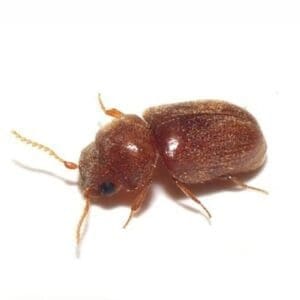
Cigarette Beetle
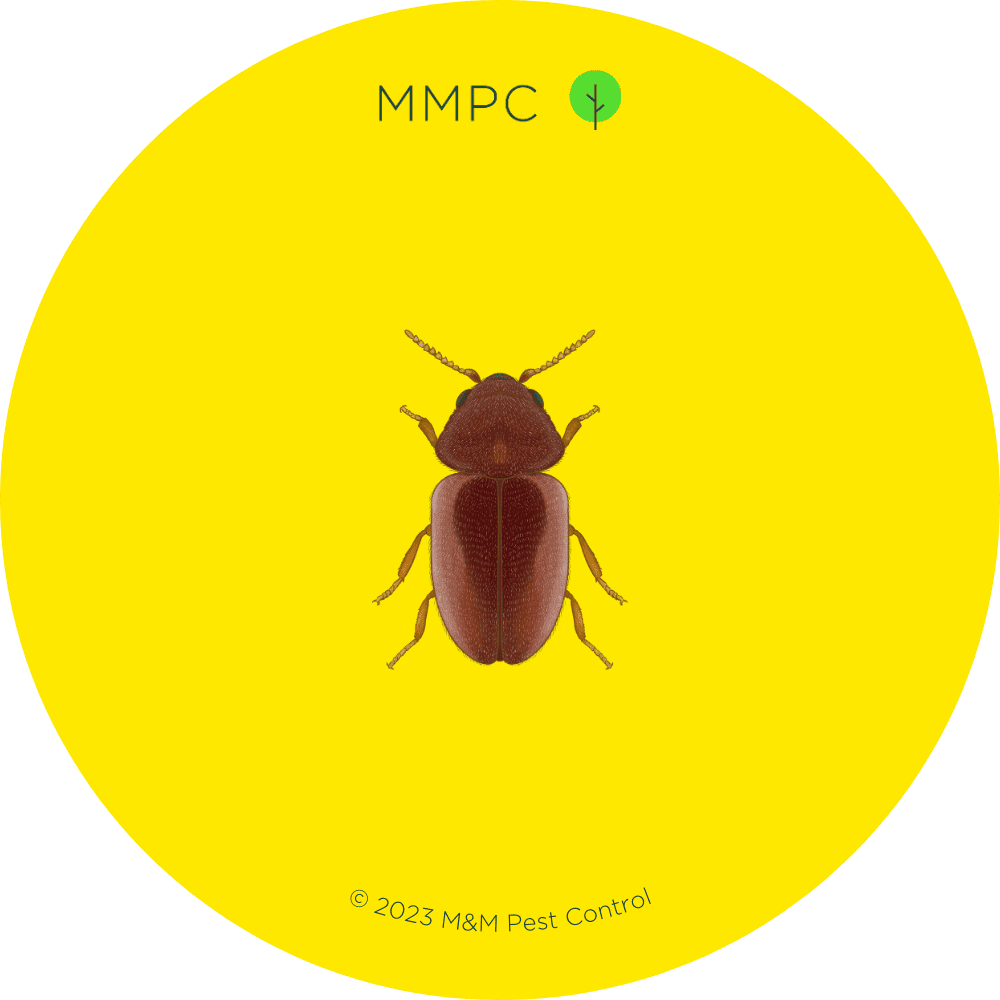
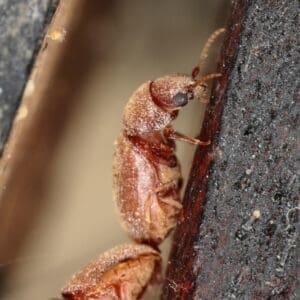
Lasioderma serricorne
A classic pantry pest. Goes after dried herbs, spices, tobacco, flour—even dried flowers and books. Flies well and tends to show up near lights in the evening. You’ll find powdery frass and fine webbing in old packages or back corners of kitchen cabinets.

Key ID Features
- 2–3 mm (1/12″–1/8″)
- Rounded, humped body with golden body hairs
- Smooth wing covers—no grooves
- Serrated (sawtooth) antennae
- Active from afternoon to dusk; attracted to indoor lights
Drugstore Beetle
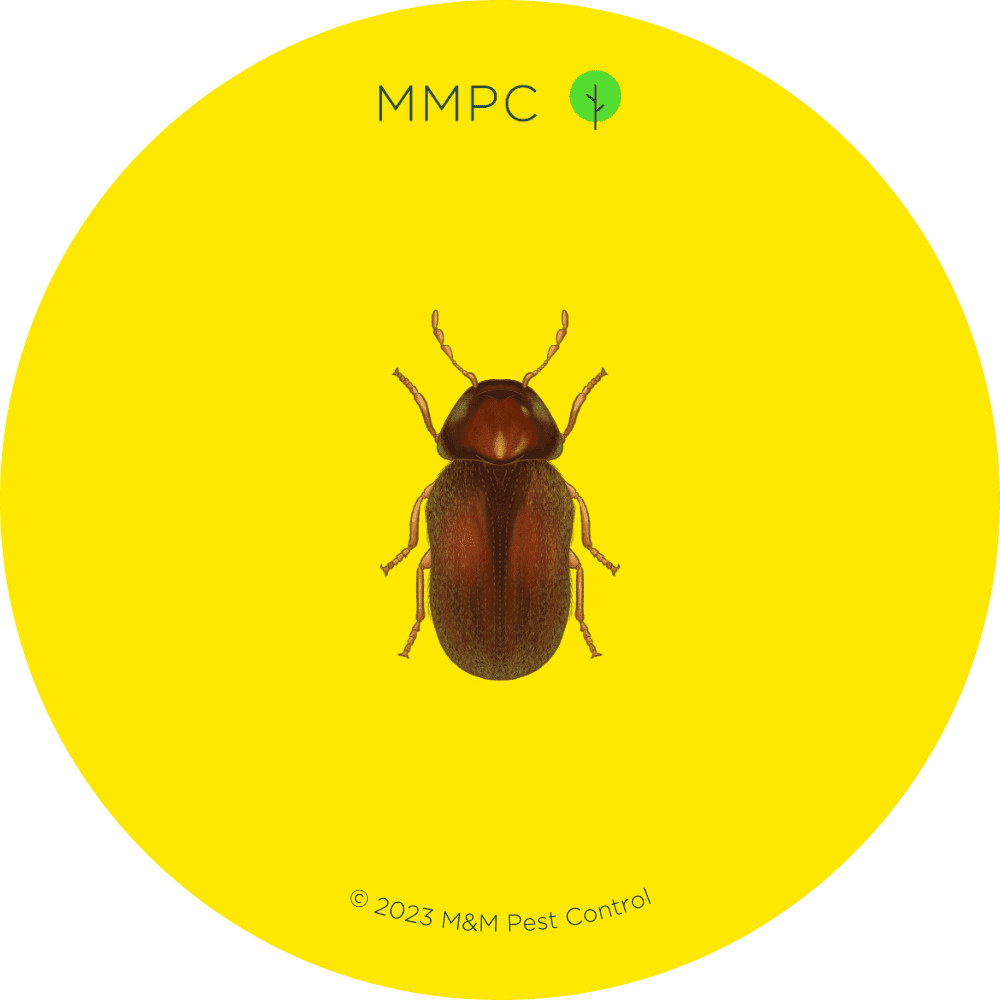
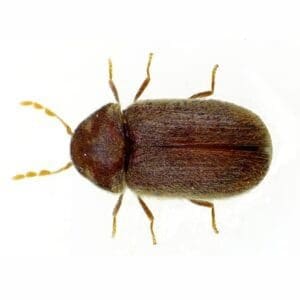
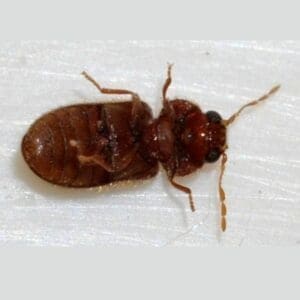
Stegobium paniceum
Easily confused with the cigarette beetle—same size, same shape—but has grooved wing covers and a clubbed antenna. Known for chewing through packaging. Shows up in everything from dry food and pet kibble to pills and paper. Can bore right through foil and plastic to get to the good stuff.

Key ID Features
- 2–3.5 mm (1/10″–1/8″)
- Hooded pronotum hides the head from above
- Elytra with fine parallel grooves
- Antennae end in a 3-segmented club
- Prefers warm, dry areas; flies when disturbed

Sawtoothed Grain Beetle
Oryzaephilus surinamensis
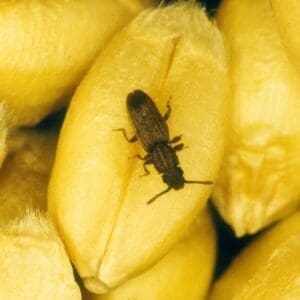
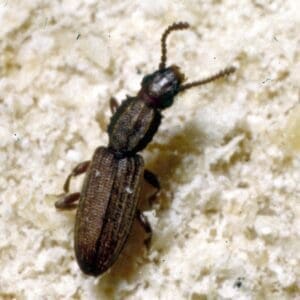
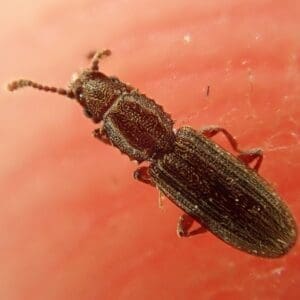
Thin and flat-bodied—built to get into tight spaces. Found in pantries and food storage rooms, especially around old cereal, flour, or grain products. Doesn’t touch whole kernels—goes after crumbs and grain dust. Crawls fast and hides well in seams and corners.
Key ID Features
- 2.5–3 mm (1/10″–1/8″)
- Six tooth-like projections on each side of the thorax
- Flat, narrow body; fits under loose packaging
- Elytra have shallow longitudinal grooves
- Can’t fly; spreads by crawling
Rice Weevil
Sitophilus oryzae
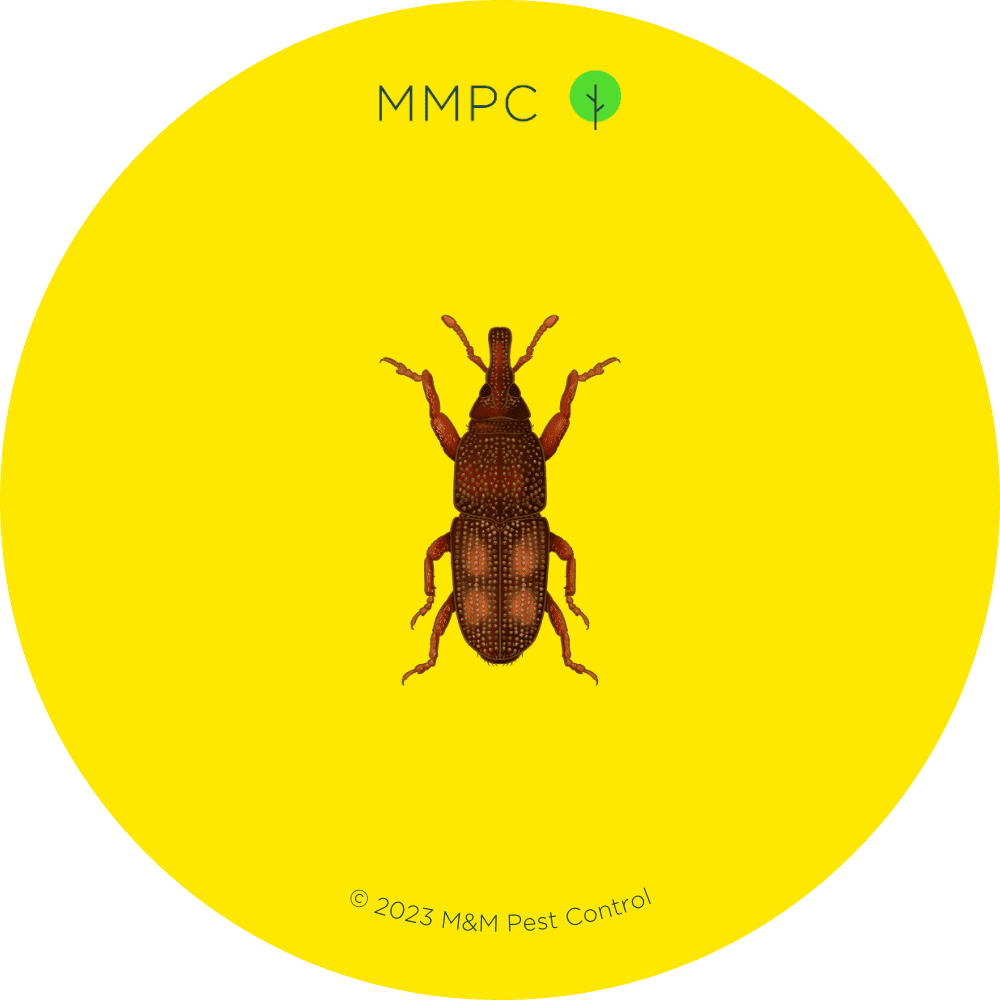
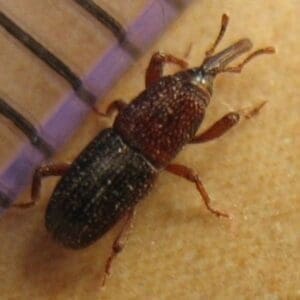
This one bores straight into whole grains to lay eggs. Larvae develop inside—hollowing kernels from within. By the time adults show up, you’ve already got a deep infestation. Common in rice, corn, wheat, and seed mixes. Moves fast in warm storage areas.


Key ID Features
- 3–4.5 mm (1/8″–1/6″)
- Long snout (rostrum) with bent antennae
- Four pale spots on reddish-brown wing covers
- Dimpled surface texture
- Capable flier; spreads easily in bulk storage
Carpet Beetle
Anthrenus verbasci, Attagenus unicolor
If you’re seeing adults on windowsills in spring, check your closets. They’re just the flyers—larvae are the ones chewing through your wool coats and rugs. You’ll find them in low-traffic spots: under beds, behind baseboards, inside vents. Anywhere there’s lint, pet hair, or natural fabric left alone too long.


Key ID Features
- 2–5 mm (1/16″–1/4″)
- Varied species: round, patterned with white/yellow/brown scales
- Black species: more oval, solid dark brown to black
- Larvae are hairy, brown, carrot-shaped
- Look for shed skins and gritty frass near damage
Powderpost Beetle
Lyctinae spp.
Goes after bare hardwood—oak, ash, hickory, bamboo. Not framing lumber. Females lay eggs in open pores; larvae tunnel for months, sometimes a year or more. You won’t see them. What you will see: tiny round holes and piles of powder under baseboards or furniture. That’s how you know it’s active.
Key ID Features
- 2–6 mm (1/12″–1/4″)
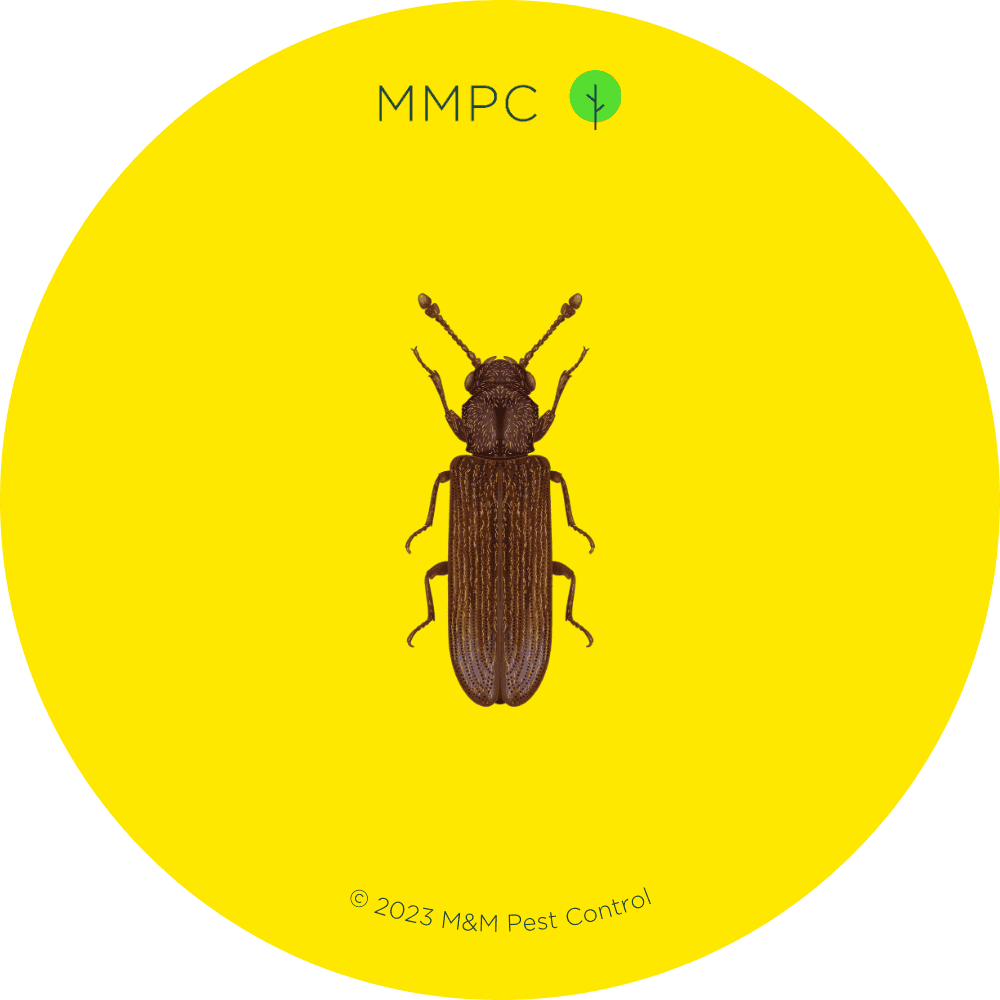
- Long, skinny body; reddish-brown to black
- Elytra with fine grooves running lengthwise
- Short antennae with blunt club at the end
- Leaves 1–2 mm round exit holes
- Frass is silky-fine, like talc
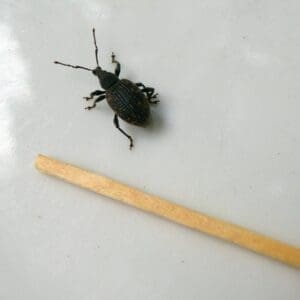
Black Vine Weevil
Otiorhynchus sulcatus
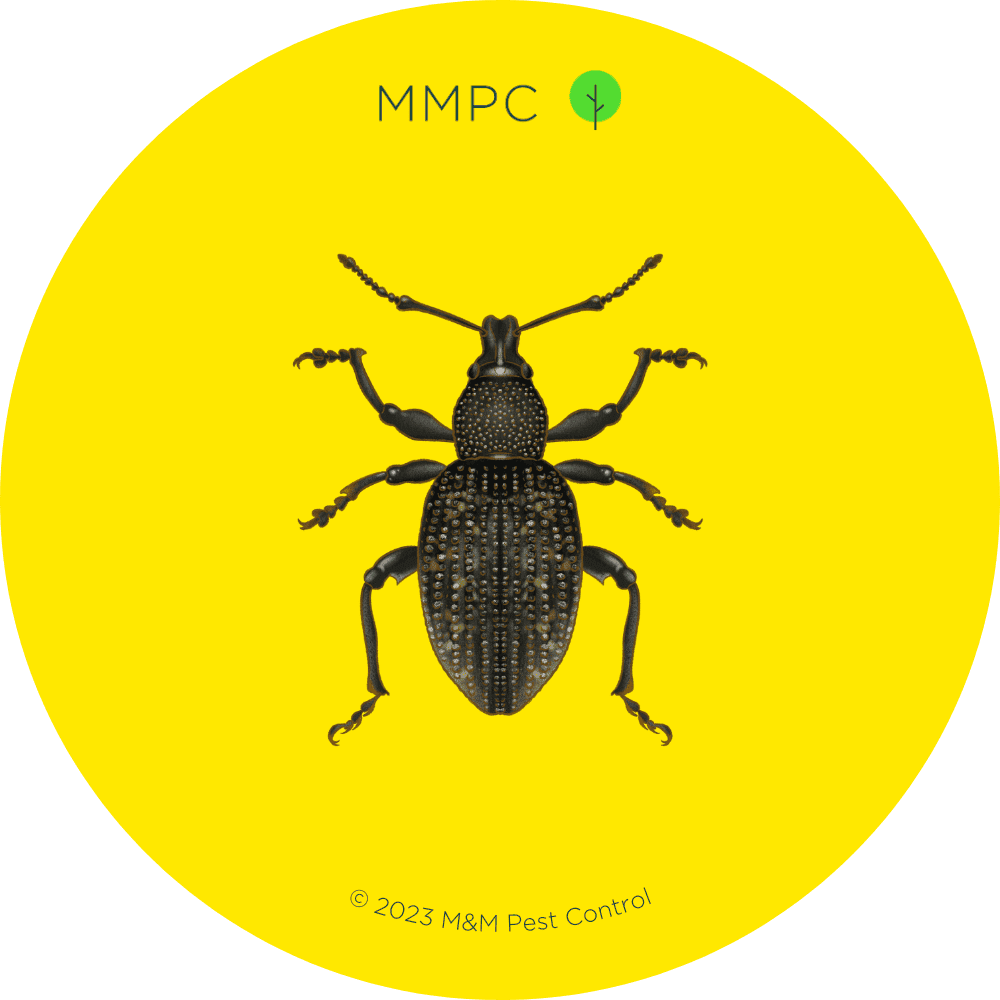
You’ll see the notched leaves first—adults chew clean half-moons into leaf edges. Larvae feed underground and can wipe out the whole plant. Common in potted plants, greenhouses, or shady landscape beds. Interestingly, the entire population is female—no mating needed. They can’t fly, but they’ll drop and freeze if disturbed.

Key ID Features
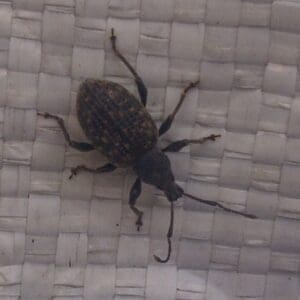
- 8–10 mm (1/4″–3/8″)
- Matte black with rough texture and faint hairs
- Curved snout; elbowed antennae
- Wing covers fused shut—flightless
- Larvae are legless white grubs in soil or root balls
Control
With beetles, the adults you’re seeing are just the symptom. The actual problem—the larvae—is usually hidden: in dry goods, wall voids, ductwork, carpet padding, hardwood trim, or soil. Sprays might knock down surface activity, but they don’t stop the life cycle. Real control means identifying the species, cutting off food and moisture, and eliminating the breeding environment.
Remove Infested Material
Infested items act as active breeding sites. If larvae are embedded, don’t waste time trying to salvage—it just extends the infestation window.
- Stored food: Discard anything with frass, webbing, or clumping. If the contents shift like sand when shaken, there are larvae inside.
- Textiles: Bag affected wool, fur, feathers, or silk. Wash on hot (130°F+) or freeze at 0°F for 4+ days. Don’t assume one wash cycle is enough—check for larval skins or frass afterward.
- Wood: Active lyctid infestations leave pinhole-sized emergence marks and powdery frass. Trim or furniture showing fresh ejection piles needs treatment or removal.
- Soil/plants: If the plant is collapsing and root inspection shows feeding scars or white grubs, it’s a loss. Remove the entire container and inspect adjacent ones.

Vacuum and Disrupt Harborage
Mechanical removal is step one—no chemical outperforms good vacuuming. You’re removing larvae, eggs, food residue, and disrupting their habitat.
- Use a crevice tool to get under toe kicks, inside duct vents, behind baseboards, inside pantry joints.
- Fabric feeders nest in low-traffic lint zones—think under furniture, behind dressers, in HVAC intakes.
- Dispose of vacuum contents outdoors. Don’t let beetles recycle indoors via bags or bins.
Seal It Up
Once pressure is down, sealing buys you long-term relief. Many reinfestations are traced to poor food storage or building gaps.
- Use silicone or backer rod to seal expansion joints, utility penetrations, and baseboard gaps—especially near kitchens and laundry rooms.
- Move all dry goods into hard plastic or glass containers with gasket lids. Beetles chew through Mylar and thin bags.
- Outside, trim vegetation back from siding. Pull mulch at least 6″ away from the structure and grade the soil to shed water.
DIY Treatments
For Pantry Beetles
- Pheromone traps – Use as an indicator, not a control method. Ongoing captures after 3 weeks mean breeding is still active.
- Food-grade diatomaceous earth – Apply lightly into shelf seams, drawer runners, and wall-floor junctions. Must remain dry. Reapply after cleaning.
For Wood-Borers
- Residual contact insecticides (pyrethroids/pyrethrins) – Apply to exposed, unfinished hardwood surfaces. Adult suppression only—larvae inside remain unaffected.
- Borate wood treatments – Works on raw wood. Apply 2–3 coats with sufficient dwell time. Penetration varies by species and wood porosity.
For Fabric Beetles
- Diatomaceous earth (non-food grade OK) – Dust along baseboards, under rugs, and inside voids. Avoid thick applications—light film works best.
- Insect growth regulators (IGRs) – Apply to larval development zones. NyGuard and Gentrol inhibit molting. Combine with mechanical cleanup.
- Thermal treatments – Wash/dry items on high or freeze at 0°F for at least 4 days. Heat tents or chambers can be used for large items.
For Root Feeders
- Beneficial nematodes (Heterorhabditis or Steinernema spp.) – Mix with water and drench soil in the evening or on overcast days. Needs 60–70°F soil temp and uniform moisture to be effective. Avoid chlorinated tap water during prep.
Frequently Asked Questions

Are beetles as bad as cockroaches?
Not really—different kind of problem. Roaches are filthy and fast. They spread bacteria, trigger asthma, and show up in kitchens when there’s poor sanitation. Beetles don’t spread disease, and they don’t move as fast. But they’ll chew through food, fabric, and wood if you give them time.
So no, they’re not as bad—but they can be worse for your stuff. Powderpost beetles wreck floorboards. Carpet beetles can ruin taxidermy and heirloom wool. Pantry beetles get into everything. You don’t get that with roaches.
What do beetles hate most?
Dry air, no food, and nowhere to hide. Most of them want three things: something to feed on, some moisture, and a place where nobody’s bothering them. Take those away, and they don’t stick around.
What works:
- Vacuum everything—especially the stuff people forget about: vents, under dressers, closet corners, backs of pantries
- Lower the humidity—below 60% in crawlspaces and storage closets
- Freeze it: 0°F for 4 days kills everything.
- Heat it: 125–130°F for 60 minutes works too
- Diatomaceous earth in baseboards or shelf seams
- Borate spray if you’ve got active wood damage
Most important: match the fix to the species. What kills a pantry beetle won’t touch a fabric feeder. Always ID it first.
Our Services

Sometimes beetle jobs are too deep, too widespread, or just too stubborn for DIY. If you’ve got larvae buried in wall voids, structural wood, or inside old storage—there’s only so much vacuuming and repackaging can do. That’s where professionals like MMPC come in.
- Professional Insecticide Application
- Heat Treatments
- Fumigation